The 13-Year-Old Labrador Who Changed Everything

Dr. Mark Kemble had been a small-animal veterinarian for eleven years before he said it out loud.
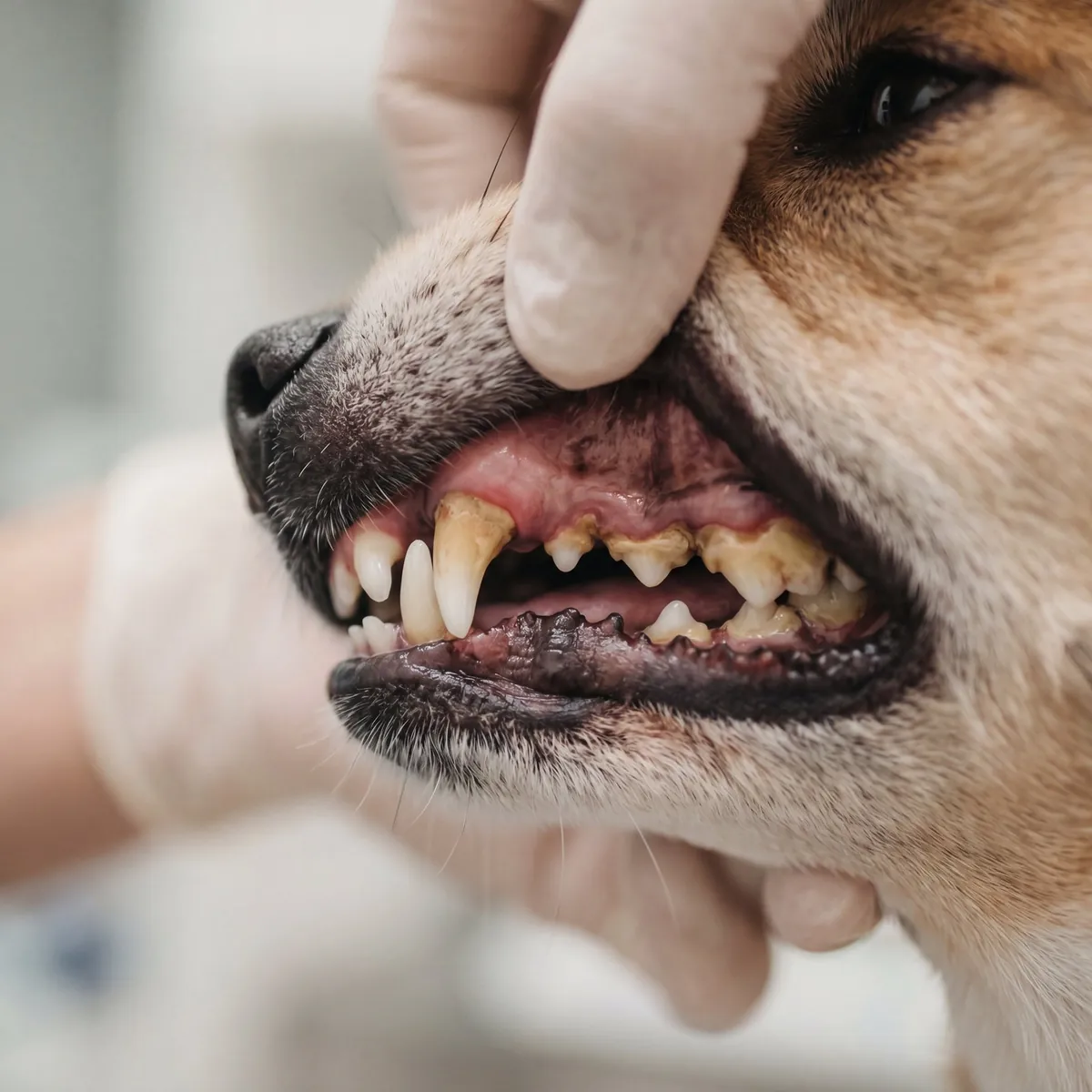
He was standing in an exam room with a Yorkshire Terrier owner — a kind woman in her sixties who'd been coming to the practice for nearly a decade. The dog's teeth were a mess. Tartar to the gumline. Two molars already loose. And Dr. Kemble was about to deliver the same speech he'd given a thousand times before.
"You really need to be brushing his teeth every day."
The woman nodded politely. Wrote it down. Promised she would.
And as Dr. Kemble watched her walk out of the room, he felt something he'd been quietly suppressing for years finally surface:
He knew the woman wouldn't do it. He knew almost none of them did. And he kept giving the advice anyway, because it was the advice in the textbook.
That afternoon, he went back to his office and pulled the charts of every senior dog and cat he'd seen in the last three years — the ones with heart conditions, kidney issues, or advanced age that made anaesthesia too risky for a professional cleaning. The pets who, by every standard rule of veterinary dentistry, should have had the worst mouths in his practice.
What he found stopped him cold.
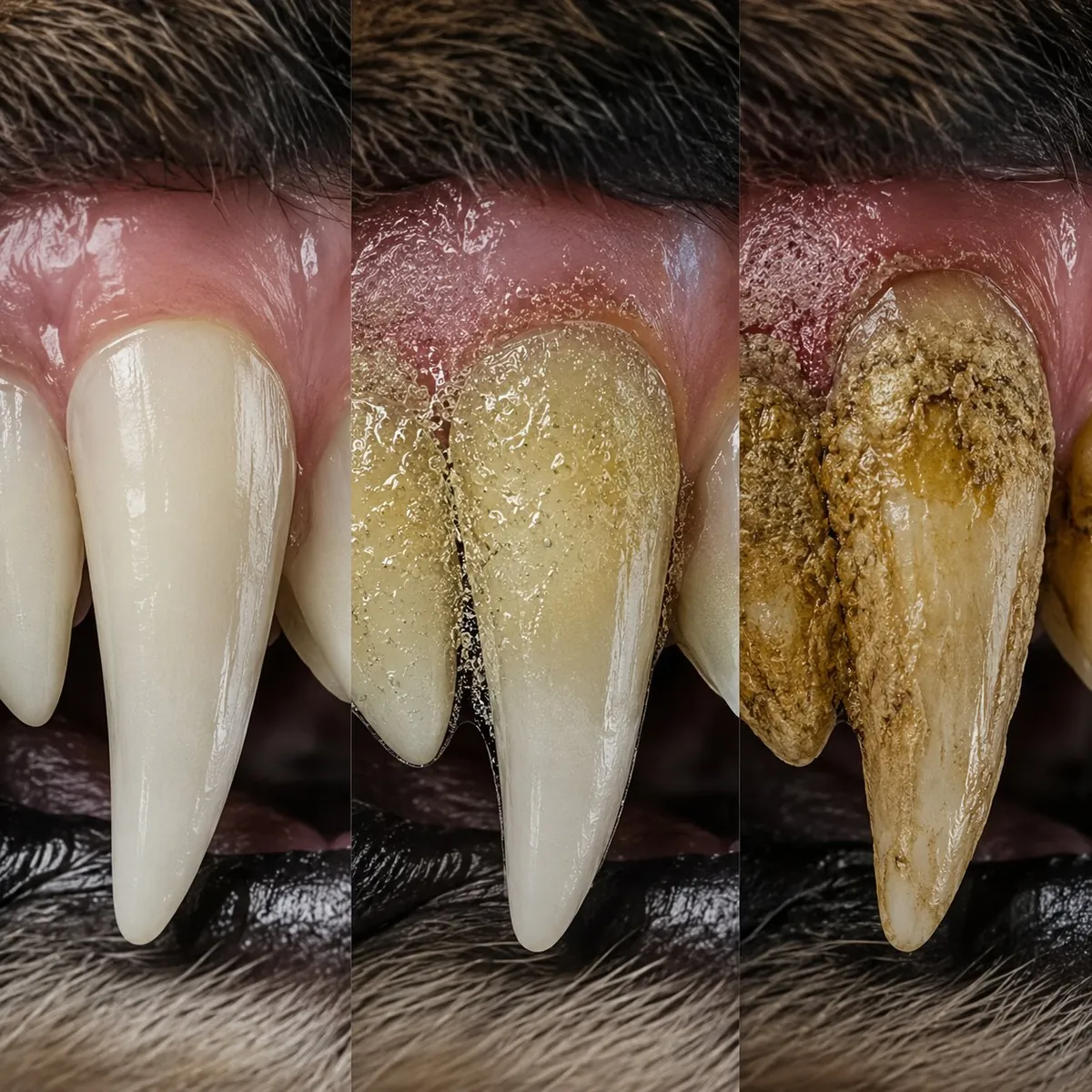
A handful of them — maybe fifteen patients — had better dental health than the average middle-aged dog. Less tartar. Pinker gums. Cleaner enamel. One 13-year-old Labrador retriever, a male named Cooper with a heart murmur that had ruled out cleanings since age 10, had teeth that looked like a 4-year-old's.
Dr. Kemble called his owner the next morning.
"I have to ask," he said. "What are you doing for his teeth?"
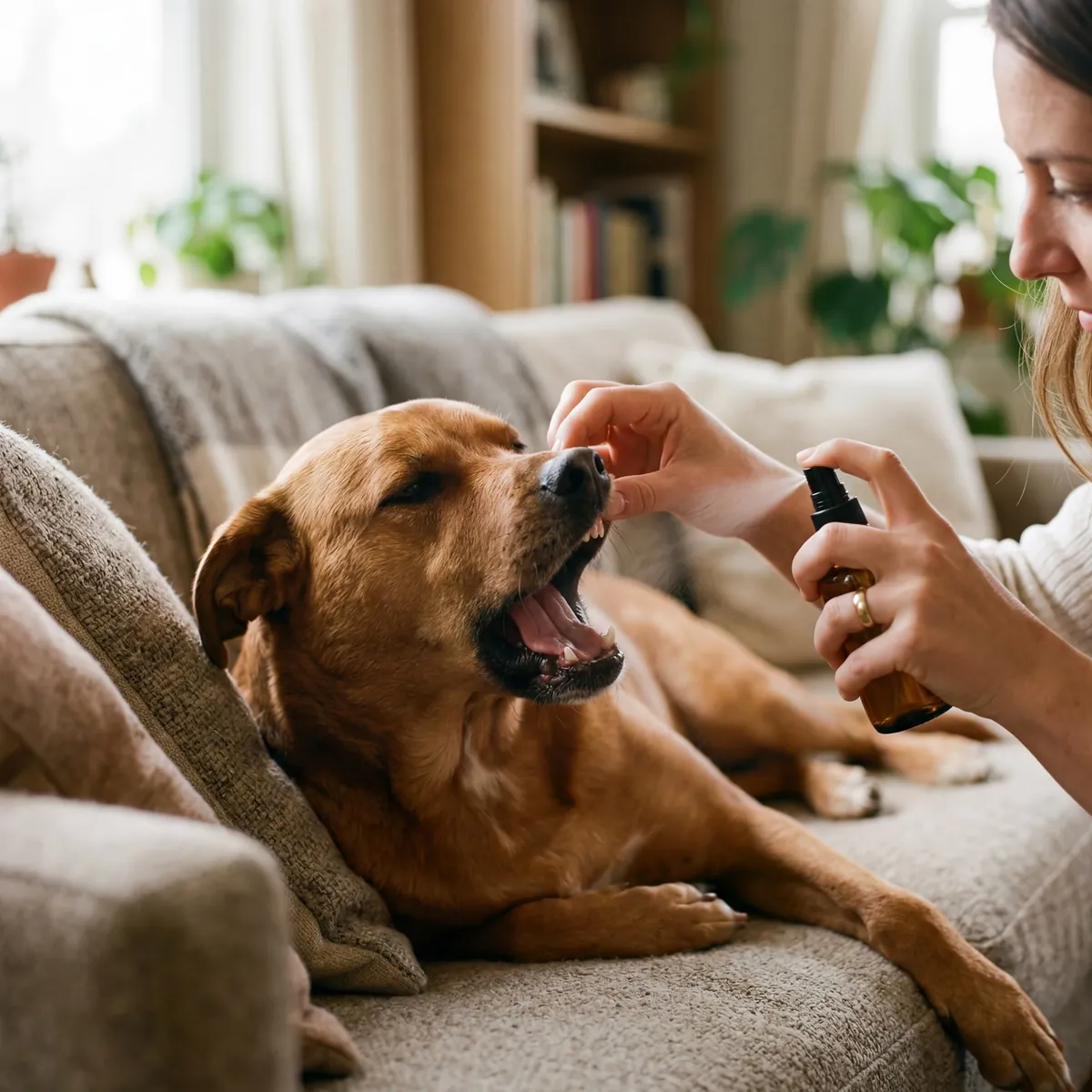
The owner laughed. "Honestly? Nothing fancy. I just spray something on his gums once a day. Takes me three seconds. I started doing it when the vet told me he couldn't be put under anymore, and I figured anything was better than nothing."
Dr. Kemble asked her to bring the bottle to Cooper's next appointment.
When he read the ingredient list, something clicked.
The formula was built around two active compounds he'd seen referenced in dental research but had never seen combined in an at-home product before. And the mechanism — the actual biological reason it was working — wasn't about scrubbing the teeth at all.
It was about hijacking the dog's own saliva to do the work, continuously, all day long.
That night, he went home and read every peer-reviewed paper he could find on the two ingredients. By the end of the week, he'd started quietly recommending the spray to his senior patients. Within six months, the difference at their annual exams was undeniable.
Within a year, he was recommending it to every patient — young dogs, old dogs, cats who hated brushing, dogs who'd never had a tooth brushed in their lives.
And then he did something most vets in his position never do.
He left his practice to help formulate his own version — a refined, premium-grade spray built around the same two active mechanisms, with the dosing and stability dialled in for at-home daily use.
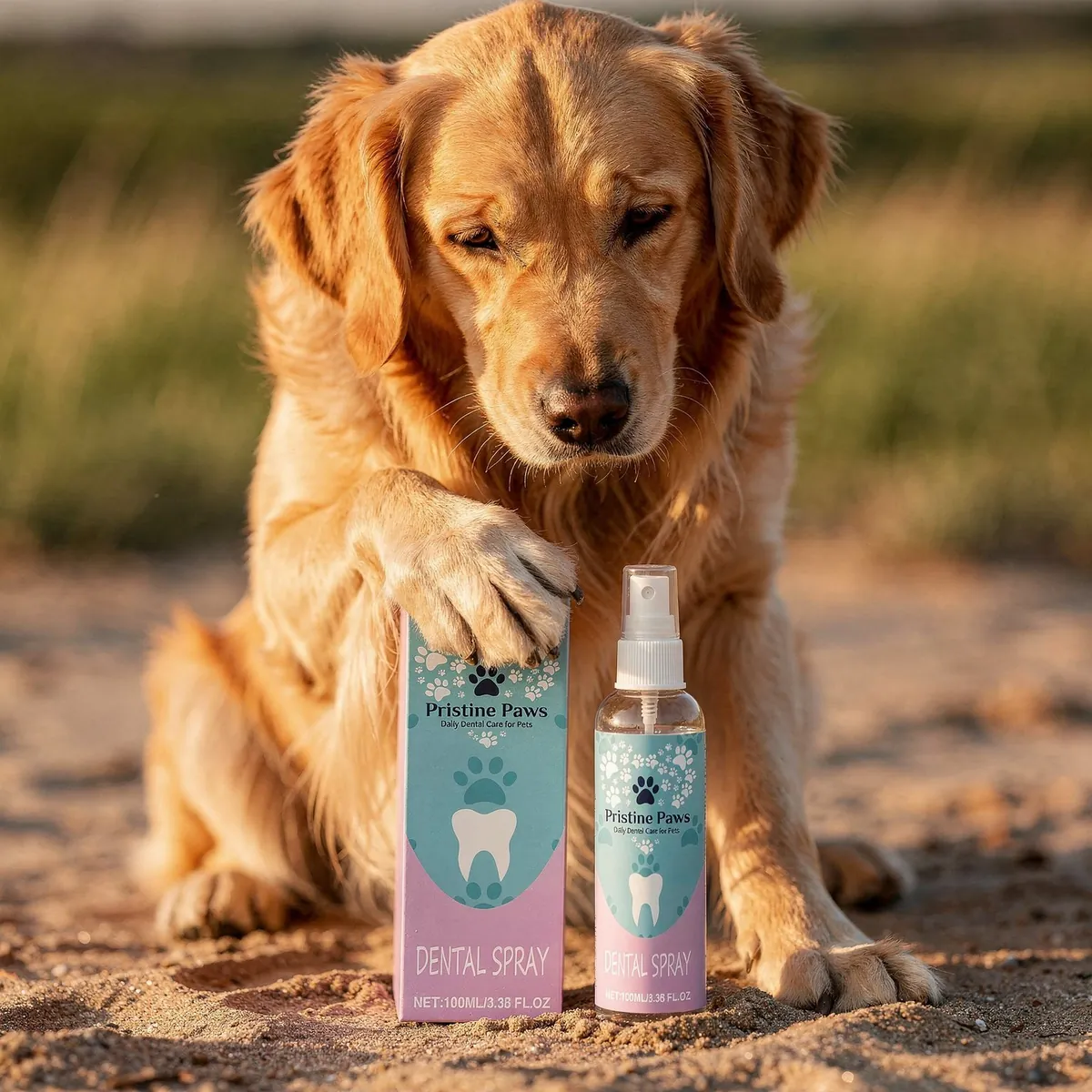
He called it Pristine Paws™.
And it's now used in tens of thousands of homes across the country.